

Are you interested in sex toys for men in India?
In this article, we will explain the types of sex toys, their appeal, how to use them, and what to look out for in India for men.
Along with that, we will also answer some of your questions about using sex toys in India, such as ‘Is sex toys legal in India?
- If you are interested in sex toys for men
- I would like to know what sex toys for men are available
- When should I use sex toys for men?
- I want to use a sex toy to increase my penis
If you have any of these problems, this article should be able to solve them.
Please stay with me till the end.
Table of Contents
What are sextoys for men in India ?

A sex toy for Indian men is a sex toy that is easy to use and suitable for Indian men in terms of size and feel.
If you live in a different place and have a different ethnicity, the sex toys that are suitable for you will vary.
Some of the sex toys that are suitable for Indian men are Male masturbators, Cock rings, FLESH LIGHT, and Male prostate toys
By using these toys, Indian men can have a more exciting and attractive sex life than ever before.
In recent years, the sex toy market in India has grown rapidly, and with this, there has been an increase in the number of sex toy dealers selling sex toys online.
If you look online, you’ll often find that you’re seeing more sex toys than ever before.
In India, you can easily get a sex toy by going online.
If you haven’t used them yet, why not take a look at this article and give them a try?
Are sex toys legal in India ?
When using a sex toy in India, you may be wondering whether it is legal to use a sex toy or not.
To conclude, it is legal to use sex toys in India.
However, while it is legal for personal use, it is a gray area for the seller.
India has laws governing obscenity, but you have to be careful not to violate those laws when you sell your products.
In fact, Snapdeal was sued by a Delhi-based Supreme Court lawyer for selling various sex toys in 2015.
However, the actual buyers are not the first to be blamed.
The appeal of sextoys for men in India

The attraction of sex toys for men is that you can get more realistic pleasure alone without a partner, and sex toys can also be used during sex to get even greater pleasure and stimulation than usual.
In the flesh, the penis cannot be stimulated as strongly as a finely crafted Male masturbator, nor can it vibrate hundreds of times per second like a vibrator.
Also, even the stimulation of the anterior ramus can be difficult to stimulate for a long time with a woman’s fingers.
But with sex toys, you can make movements that are impossible for those people to perform, movements that are a little bit too much for them.
You can also use a Sex doll to do some other unusual things that you might not want to try with your girlfriend.
If you want to have a more intense experience, or if you think your girlfriend might be reluctant to play with you, you can leave it to the Sex doll.
Stroker can feel better than a woman’s vagina
A male masturbator(stroker) provides greater pleasure than a female vagina when a penis is inserted.
Many men feel that a real woman’s vagina is not as tight as a real woman’s vagina, but the Male masturbator allows you to adjust the tightness of the Male masturbator so you can apply the pressure you want.
There are also many toys that are designed to be highly stimulating, so many men become addicted to them once they use them.
Due to the popularity of Male masturbators in recent years, there are many different types of toys on the market, so you can enjoy a variety of different types of toys.
Repeated use is even more economical
Not all men’s sex toys are necessarily disposable.
There are many toys that can be used for quite a long time if they are cleaned up and maintained.
For this reason, sex toys themselves may often seem a bit pricey, but they are actually quite economical in the long run.
Especially with Male masturbators, it is possible to get used to the shape of your penis as you use it, and you will become attached to it and not be able to part with it.
It’s just like leather goods, the more you use it, the more you use it, the more you get a taste for it. Male masturbators are a gentleman’s way of life nowadays.
You can get rid of your penis problems
Many people have problems with their penises, such as a smaller penis or lack of hardness.
These problems can also be solved with sex toys for men.
There are a variety of toys that can help you get rid of your penis problems, which we will discuss later, but they range from improving hardness, maintaining an erection, and elongating the length of your penis.
People are a little hesitant about things that may have a big impact on their bodies, such as surgery or supplements, but with sex toys that are not medical devices, it is easy to challenge yourself.
Introduction to sextoys for men in India

Let’s continue with the specifics of sex toys for men in India.
We have collected the 7 most popular toys in India right now.
「I don’t know what kind of sex toys to buy!」
「What kind of sex toy is right for me?」
There is no doubt that these questions can be answered.
Male masturbator/stroker
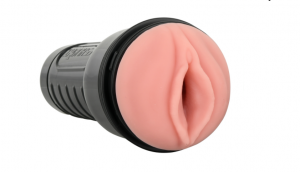
First of all, the most popular sex toy for men is the Male masturbator (stroker).
A Male masturbator is a toy in which a penis is inserted into an elaborate replica of a woman’s vagina, anus or mouth, and it is one of the toys that are very popular among Indian men today.
As I mentioned earlier, Male masturbators are made with a focus on helping men get pleasure from them, so they feel much better than a live woman.
There are two types of Male masturbators: the disposable type and the washable, reusable type.
Disposable Male masturbators are simpler than reusable Male masturbators and can be purchased for as little as RS200.
Repeated use Male masturbators, on the other hand, are designed for a more realistic feel of a woman’s vagina.
For this reason, the price tends to be a little higher because they are made of a lot of high-quality, soft silicone.
There are also two types of Male masturbators: penetrating and non-penetrating.
The penetrating type is a cylindrical Male masturbator that goes through, as the name implies.
Since they are tubular, they are relatively easy to clean and dry, and while they are hygienic, they often feel a little less comfortable than the non-penetrating types.
In contrast, the non-penetrating type does not penetrate, so the glans does not come out, and you can enjoy a more realistic female sensation.
However, since they are not penetrating, they are difficult to wash and dry, so hygiene can be a concern.
Disposable and repetitive use, penetrating and non-penetrating, each has its own personal preferences and advantages.
It might be fun to try them all out and find your own preference.
FLESHLIGHT India
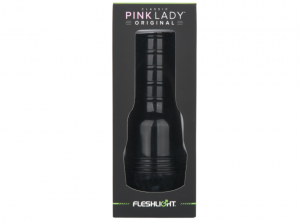
You may be familiar with the FLESHLIGHT Male masturbator sold by FLESHLIGHT, an American company.
It is a very long-selling Male masturbator that looks like a large flashlight and has sold more than 12 million units since it was launched in 1997 to date.
What makes FLESHLIGHT so popular among Male masturbators is its durability and unique feel.
The unique feel of FLESHLIGHT lies in its original material called “Super Skin”, which has been patented internationally.
The inside of the skin is made in such a way that it has a three-dimensional folds structure and adheres closely to the body, so there are many people who become addicted to it once they use it.
Also, while most Male masturbators are usually made of elastomer (a material similar to silicone) only inside and sponge outside,FLESHLIGHT is made of elastomer in abundance.
As a result, it often feels heavier than other Male masturbators, but that weight gives it a more realistic feel.
The special flashlight-like case is attached to the elastomeric penis insertion part, but it is removable and easy to maintain.
It is removable and easy to maintain. You can keep your FLESHLIGHT clean.
In addition, the FLESHLIGHT also has a vacuum adjustment function.
The vacuum function allows you to experience a unique sucking sensation that cannot be experienced with other Male masturbators.
There are Male masturbators that have a vacuum function, but withFLESHLIGHT’s vacuum function, you can adjust the strength of the vacuum as you like.
Although Fleshlight is more expensive than other toys, the product itself is very well-balanced and highly satisfying, so it’s no wonder that it has been a favorite for so long.
Because of the durability of the product itself, many people buy one and use it for a long time. It’s a product with a high cost performance.
Cock Rings
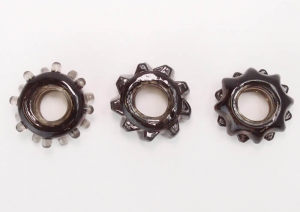
A cock ring is a ring-shaped sex toy for men that is attached to the penis.
There are many different types of cock rings, some of which have a simple ring shape, some of which can also be attached to the testicles, and some of which have a part that stimulates the female clitoris.
Basically, the ring is inserted into the base of the penis to make it congested.
The stasis can help maintain an erection longer, improve premature ejaculation, and increase the size of the penis.
When you say congestion, you may ask yourself, “Isn’t that dangerous? You may be concerned about this, but it’s okay as long as you don’t wear it for too long.
At this point, don’t substitute the cock ring for rubber bands or anything else, but be sure to buy the one sold as a cock ring.
In most cases, you can buy them for about RS100 if they are cheap, and at most RS2000 if they are expensive.
In addition, if you use a cock ring, you can feel the pleasure of ejaculation more strongly than usual.
People feel pleasure when they excrete, and it feels extraordinarily good to release all that they have been holding back at once.
The pleasure you get through cock rings is similar to that.
The position of the cock ring varies, but the most orthodox way to use it is to wear it at the root of the penis.
It can be worn at the base of the penis to maintain an erection, or it can be worn just below the glans or in the middle of the penis.
They are often made of rubber, leather or silicone.
A cock ring may also be used as an accessory during sex, but it may be made of metal.

Penis Sleeves
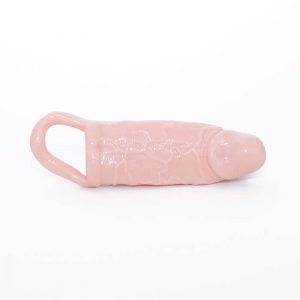
A penis sleeve (penis sack) is worn on the penis in the same way as a condom.
It differs from a condom in that it is quite thicker than a condom.
Normally, condoms are quite thin, 0.01 mm to 0.12 mm in thickness.
On the other hand, penis sleeves are 0.5 mm to 1 mm (some are thicker).
Penis sleeves are used to improve premature ejaculation and to maintain the hardness of the penis.
Not only does it improve premature ejaculation, but it also increases the size of the penis simply by wearing it (because of its thickness), which is effective for women’s satisfaction.
There are various types of penis sacks, such as those with a vibrator function, those made to increase the size of the penis considerably more than usual, those with a lot of bumps and dips, and those that do not cover the entire penis and have the glans cut off, and so on, depending on the purpose.
For example, if the goal is to satisfy a woman, the ones that are large or have a vibrator function are better.
If the goal is to improve premature ejaculation, it is better to use thicker ones or ones with a cock ring, depending on the situation.
By the way, if you use it attached to the penis in the same way as a condom, do you not need a condom?
You may think that the penis sleeve has no contraceptive effect, but you need to wear a condom before wearing it.
Penis sleeves are one of the most popular products that can be easily adopted to increase the size of a penis.
Male Prostate Toys
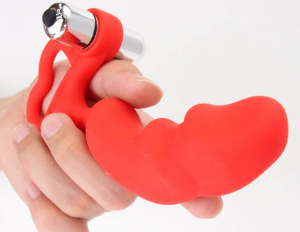
A prostate toy can stimulate the prostate gland, which is said to provide many times more pleasure than normal ejaculation.
The prostate gland is the organ between the bladder and the penis and is about the size of a walnut.
Normally the prostate gland is not something you can touch, but you can easily stimulate it yourself with special products.
Stimulating the prostate gland to feel pleasure without ejaculation is called a dry orgasm, which is said to be proximal to the sensation a woman feels when she comes, and the anterior line is sometimes referred to as the ‘male G-spot’.
Dry orgasms are also quite intense, and many people become addicted to them once they learn to do so.
To experience this dry orgasm, a prostate toy is used.
Because it is difficult to stimulate the prostate for a long time with fingers, they use toys to stimulate the prostate.
The most popular prostate toys are anal vibrators such as the Analizer Rosso and Labyrinth.
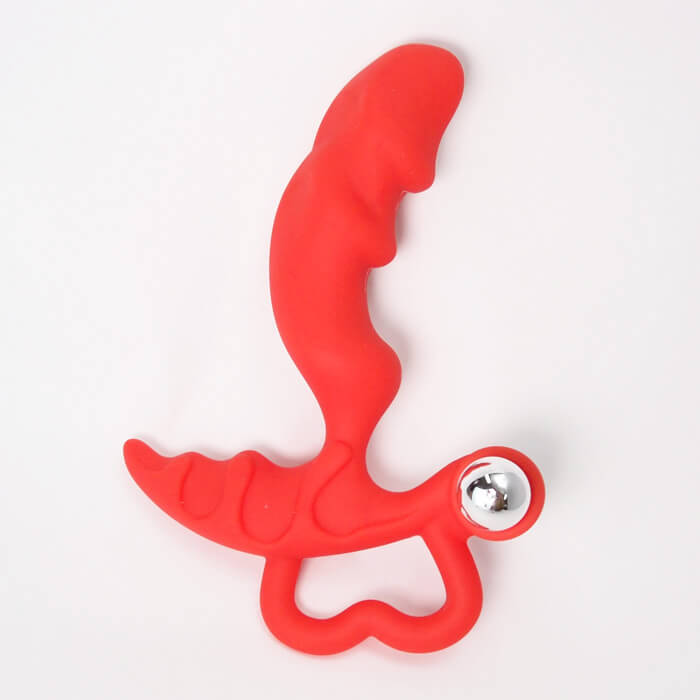 |
| Analyzer Rosso |
| Rs 3530 |
| BUY |
Both of these toys are inserted through the anus, and the body has a vibrating vibrator function, so you can stimulate the prostate while inserting it.
If normal sex isn’t enough for you, you might want to try using a prostate toy to experience a dry orgasm.
If you’ve never inserted a toy into the anal area before, I recommend that you don’t use an anal vibrator at first, but instead use an item to gradually get used to it.
Sex Doll

Many sex toys for men can be used with a partner, but a Sex doll is a sex toy for one person.
There are various types of dolls, such as humanoid, ass-only, breast-only, etc., but you can generally set up a Male masturbator of your choice and insert your penis into it.
There are three main types of dolls: human-shaped, ass-only, and breast-only.
- There are three main types of dolls: “real dolls”, “real-life”, and “real-life”.
- A “parts doll” made entirely of body parts
- Simple doll “Air Doll”
Real dolls are dolls with a metal skeleton and as little posing as possible to make them look like real people.
 |
| MIYU MATSUDA 135cm/4.4ft |
| Rs 244475. |
| BUY |
Some of them can be made to order and made to look completely to your liking.
Parts dolls are dolls that are made to look like a part of the body, such as legs only, chest only, or butt only.
 |
| Cutie Pai |
| Rs 48600 |
| BUY |
They don’t take up as much storage space as real dolls, so they are highly recommended for introductory dolls.
There are also air dolls that look like balloons that you can inflate by filling them with air.
 |
| LOVE BODY COCO |
| Rs 4374 |
| BUY |
Although air doll is not as good as it looks, it is recommended to make the user wear women’s panties or costumes, which are quite realistic.
- You want to inflate the air only when you need it
- No storage space
- Difficult to buy expensive dolls
For these men, Air doll is the best choice.
Although they take up a little bit of space, these Sex dolls will get you hooked once you use them.
Because they are dolls, not flesh and blood, they allow you to give in to all the desires you have.
You can’t force your partner to do anything, but with a doll, you can do whatever you want because there is no pain or emotion.
Also, you can dress your partner in your favorite clothes, pose him/her in your favorite pose, sleep with him/her, and so on…
Another charm of Sex dolls is that you can enjoy them in ways other than sex.
You can also try them out in other ways besides sex, which is one of the attractions of Sex dolls.
Penis Enhancement Toys
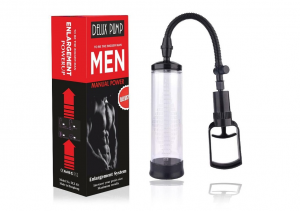
Penis Enhancement Toys are a dream come true for men with penis problems who want to increase their penis.
There are various penis enlargement products, but two of the most popular products for Indian men are the Dick Stretcher and Penis Enlargement Pump.
Both of these devices are attached to the penis and can be physically stretched using mechanical force.
The penis enlargement pump works by putting the penis in a tube, pumping the inside of the tube, creating a vacuum, and stretching the corpus cavernosum, making the penis itself larger.
There are electric and manual pumps, with the electric pump being slightly more expensive.
However, there is no medical evidence that stretching the corpus cavernosum causes the penis to increase in size.
Rather, too much suction can cause blistering of the glans and penis.
In contrast, the Dick Stretcher is a product that physically enlarges the penis in the form of traction.
This traction-induced increase in size was demonstrated in a paper published by researchers in Turin, Italy, in April 2011 in the Journal of the British Urological Association in which they found “a positive effect on penile enlargement.
In this study, 109 experimental subjects gained an average of 1.8 cm, 2.3 cm in normal conditions and 1.7 cm in erection.
If you’re having trouble with your penis size, you may want to try a traction-type dick stretcher to increase its size.

How to choose sextoy for men in India

When choosing a men’s sex toy, the following three factors can help you make fewer mistakes
- Choose a successful and popular product
- Choose materials that are soft
- Choose a non-electric one first
First of all, if the product is “selling well and is popular,” there are fewer failures.
It sells because a lot of people use it and think it’s good.
Different people have different senses, so even if many people say a product is good, some may not be suitable for you, but it is safe to take in the opinion of the public first.
Secondly, choose a soft material.
Sex toys can vary from soft silicone to glass or metal.
If you are not used to handling sex toys, hard materials can lead to injury.
For this reason, you should choose a soft material at first to avoid mistakes.
Lastly, First, choose a non-electric one.
Many people tend to think that manual models are better because they are more tiring, but in many cases, electric models are less adjustable in terms of movement and strength, and are more stimulating than expected.
Electric motors tend to be more expensive than manual ones, and you don’t want to feel like you’ve failed after you buy one.
Therefore, it is less likely to fail if you first try manual sex toys and find out what level of stimulation you are comfortable with.
I recommend that you buy a few sex toys first, and then pursue your own preferences in them.

How to use a sex toy for men
You can use sex toys for men in the following ways
- Use it when you can’t see your girlfriend
- It is used when you want to have special masturbation (sex) than usual
The premise is that it is not recommended to use sex toys regularly.
If you use sex toys on a regular basis, you will become accustomed to the intensity of the stimulation and it will be difficult to have an orgasm during normal sex.
Therefore, sex toys should be used when you can’t see your girlfriend or when you want to take your time to enjoy a different and special form of masturbation.
Caution

There are three things to keep in mind when choosing a sex toy for men
- Is the form easy to maintain?
- Is it safe to use?
- Whether the size is correct
When choosing a sex toy, the first and foremost consideration is whether or not it is hygienic and safe to use.
Most sex toys come in contact with the most delicate part of the body, such as the genitals and insertion.
If an unclean one is used, bacteria can enter through the microscopic wounds and cause infection and festering.
Therefore, it is of utmost importance to keep sex toys clean.
Choose one that is easy to maintain, such as easy to wash and sanitize.
Next, make sure it is safe to use.
In the case of sex toys, they are almost always sold as joke items.
Normally, if you want to ensure the safety of something inserted into or touching the genitals, it must be approved as a medical device.
However, it is quite expensive and time-consuming to apply for this medical device.
Therefore, its use is sold as a joke toy at your own risk.
For these reasons, you should carefully examine reviews and product descriptions when choosing a sex toy.
Lastly, it should be the right size for you.
As with both anal and penis, if you try to insert or wear one that is not the right size for you, the skin will be damaged and you will get injured.
In particular, the inside of the anus is a mucous membrane, and it will take much longer for the mucous membrane to heal than the skin, once it is injured.
If you are not sure about the size of your sex toy, I recommend you to start with one size smaller.
Extras: Can you DIY your own Male masturbator?

This is a bit off topic, but did you know that you can DIY your own Male masturbator?
Although I don’t recommend it for hygiene reasons, you can create one by using jelly, poultice, konjac with a hole in it, or a plastic bag filled with hot water.
The DIY Male masturbator will be introduced in another article, but you may also want to make your own Male masturbator with familiar objects.
However, as I’ve said many times before, the best way to ensure safety is to use a company’s own stamp of approval.
It is recommended that you do so carefully and at your own risk.
Summary
What did you think?
In this article, we have focused on sex toys used by men in India, and introduced the use of sex toys for men, their appeal, how to use them, and what to look out for.
With the development of the Internet, male sex toys are now easily available for purchase.
How about using sex toys for men to enjoy a more special kind of masturbation and sex?
For more information on how to purchase a sex toy, please refer to this page.

Also, if you want to check out more variety of sex toys for men, please check out this article.